
Guide
Backup Power with a Power Station: What It Can – and Cannot – Do
During a power cut, a power station keeps important devices running – quietly and without exhaust fumes. Here you will learn how to plan properly and where the limits lie.
Updated 7 min readEditorial team wospeicher.de
What a power station is good for in an emergency
Power cuts are rare in Germany and usually short. Even so, an outage lasting several hours can be unpleasant: the fridge defrosts, the internet goes down, the gas heating fails because its controls and pump need electricity. A power station bridges such situations for selected devices. Unlike a petrol generator, it can also be used indoors, is quiet and ready to go immediately.
Having the right expectations is important: a power station supplies individual devices, not an entire home. Electric cookers, instantaneous water heaters, heat pumps or electric fan heaters need so much power and energy that even large units are drained after a short time.
Calculating runtime – the rule of thumb
Estimate the runtime like this: capacity in Wh × approx. 0.85 ÷ consumption in W = runtime in hours. The factor 0.85 accounts for inverter losses and the residual capacity that cannot quite be used. For devices that run via USB or 12 V, the factor is slightly better.
Fridges do not run continuously but in cycles. A modern fridge with an annual consumption of around 150 kWh needs a good 400 Wh per day on average, so about 17 W on average – but briefly several hundred watts when the compressor starts. The power station’s peak output must cover this.
- Router + fibre/DSL modem (approx. 15 W): around 55 hours with 1,000 Wh (assumption).
- Fridge (approx. 400 Wh/day, assumption): a good two days with 1,000 Wh.
- Gas heating: controls + circulation pump (approx. 60–100 W, assumption): about 17 to 28 hours with 2,000 Wh – only with a professional feed-in connection.
- LED light (10 W) and radio (5 W): barely significant.
- These figures are rough examples – measure your devices beforehand with a plug-in energy meter.
Power stations with UPS or backup function
Ad All products linked with "View offer" are commission (affiliate) links: if you buy through them, we earn a commission – the price stays the same for you. As an Amazon Associate and eBay Partner Network affiliate we earn from qualifying purchases. Learn more
 Ad−34%
AFERIY 1800W1024Wh Tragbare Powerstation, 1Std Schnellladung für Camping …
 Ad−40%
AFERIY 2400W2048Wh Tragbare Powerstation(Peak 4800W), 1,5Std Schnellladung …
 Ad
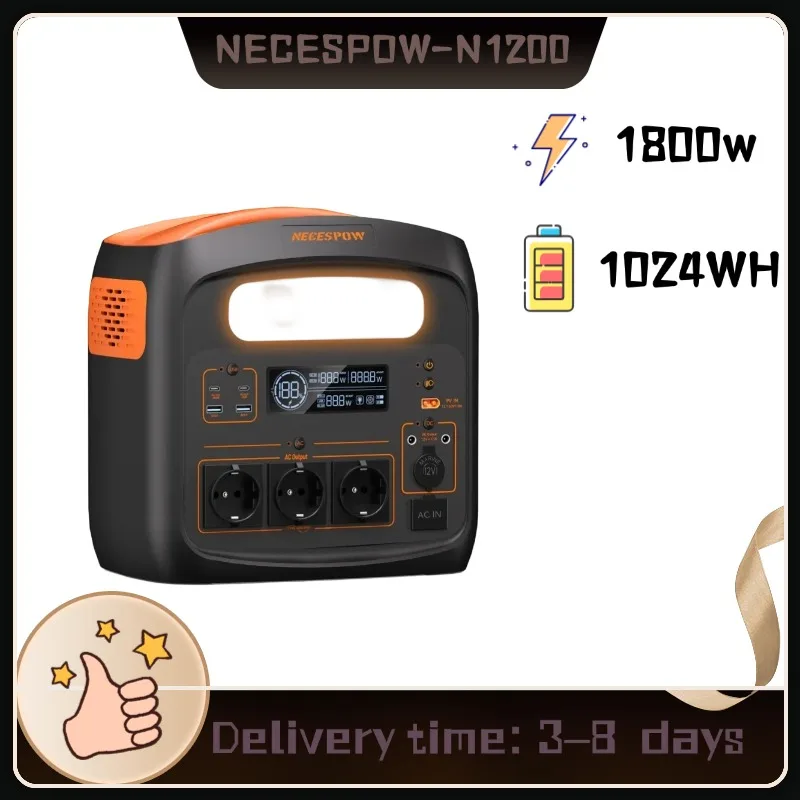
AdNewsmy (necespow) N1200 1800W Tragbare Powerstation 1024Wh LiFePO4-Batterie …
 Ad
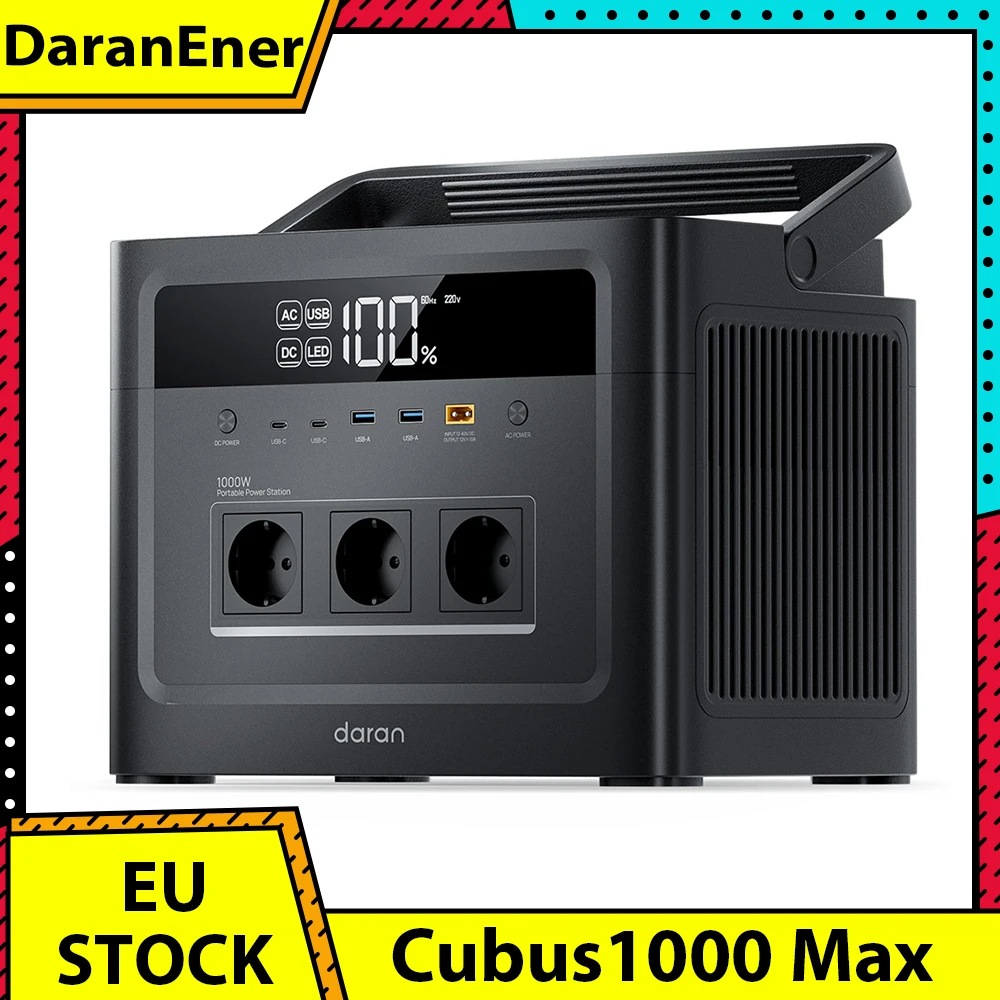
AdDaranEner Cubus1000 Max Tragbare Powerstation, 1152Wh LiFePO4-Akku …
What does not work: feeding the home grid via a plug
Instructions are circulating online for feeding a power station into a wall socket via a cable with two plugs in order to supply the whole house. This is potentially fatal and prohibited. The pins of the free plug are live, and if the grid comes back or is not cleanly disconnected, there is a risk of damage, fire and danger to line engineers.
If you want to supply household circuits – such as the heating – in an emergency, there are permitted solutions: a transfer switch or a special feed-in socket with grid isolation, installed by a qualified electrician. Some power station manufacturers offer suitable transfer boxes; these, too, must be installed professionally.
UPS mode: always prepared
Many power stations can be left permanently between the socket and the device. In normal operation, the power is passed through; during an outage, the unit switches to the battery within milliseconds. This way, a router, aquarium or chest freezer barely notices the outage. Check the stated switchover time and that the manufacturer supports continuous operation. Some models offer a charge limit so that the battery is not kept at 100% all the time – this is easier on the cells.
Recharging during longer outages
If an outage lasts longer than the battery capacity, you need a way to recharge. Foldable solar panels are the most convenient: on a sunny day, 200 to 400 W of panel power delivers roughly 1 to 2 kWh – enough to supply the fridge and router for another day. In winter and under cloud, it is considerably less. Alternatively, the power station can charge in the car while driving, albeit slowly.
Large power stations from 2 kWh
Ad All products linked with "View offer" are commission (affiliate) links: if you buy through them, we earn a commission – the price stays the same for you. As an Amazon Associate and eBay Partner Network affiliate we earn from qualifying purchases. Learn more
 Ad−43%Ad−40%
AFERIY 2400W2048Wh Tragbare Powerstation(Peak 4800W), 1,5Std Schnellladung …
 Ad
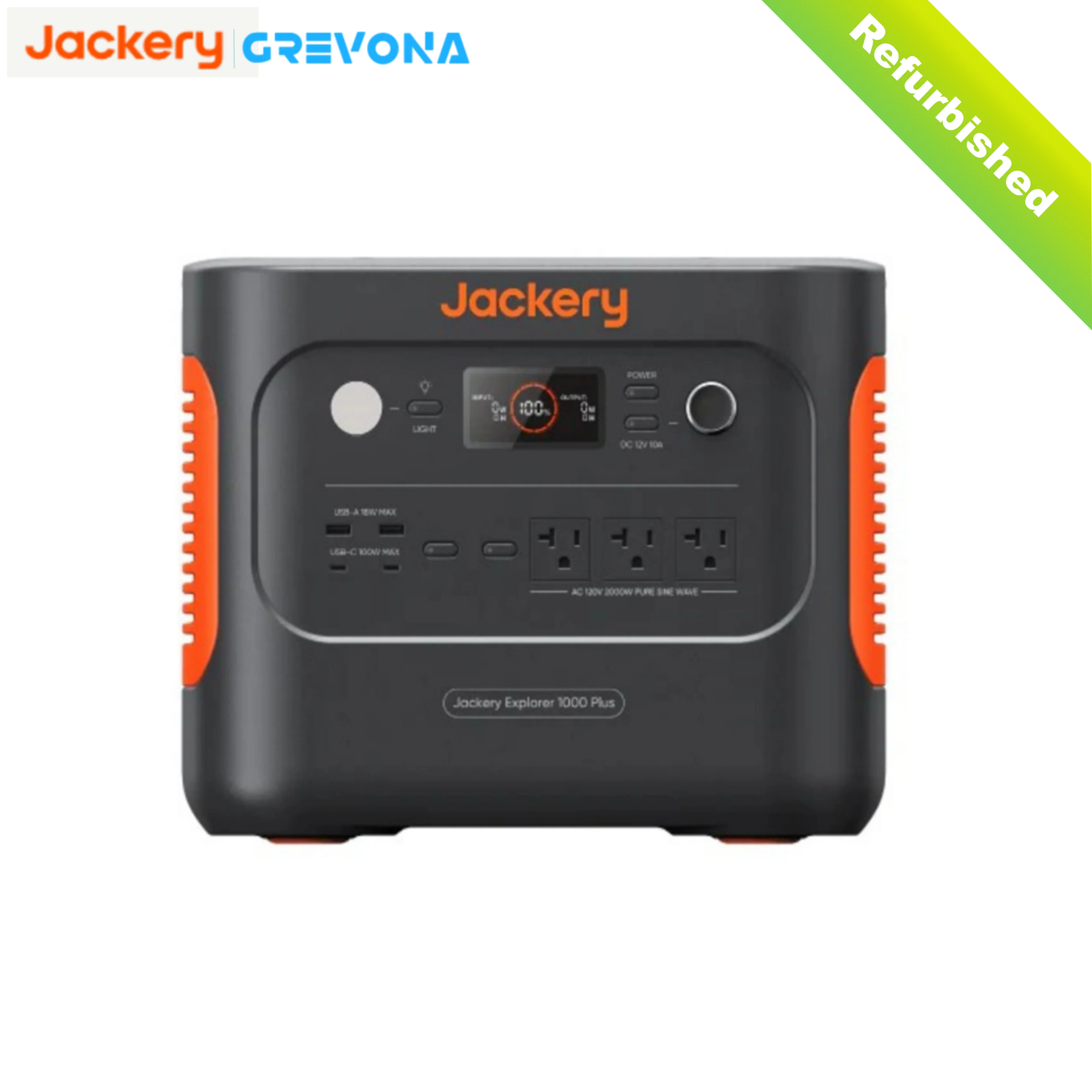
AdJackery Explorer 1000 Plus Tragbare Powerstation 1264Wh 2000W LiFePO4 …
 Ad
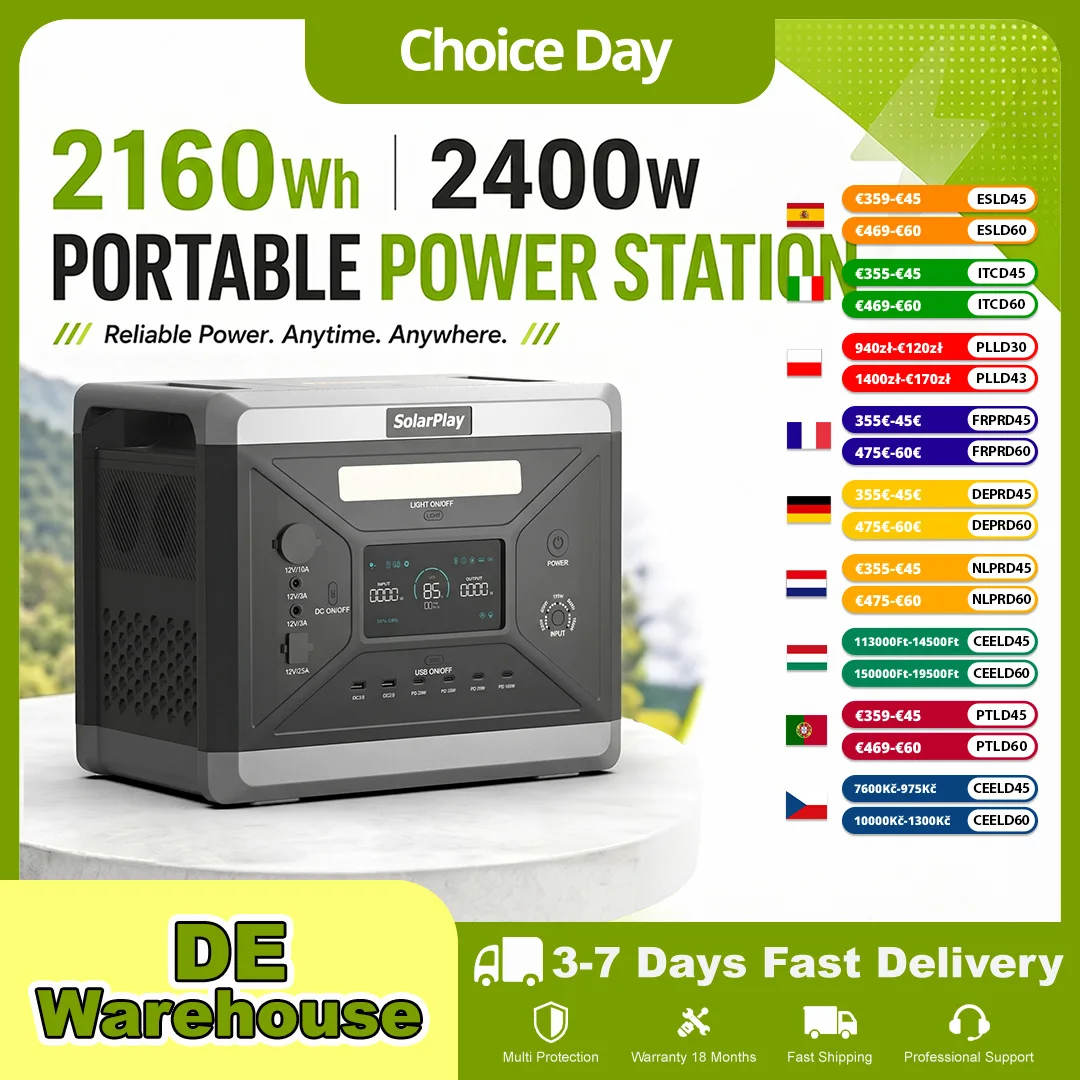
AdSOLARPLAY Tragbares Kraftwerk 2160Wh LiFePO4-Batterie …
Preparedness checklist
A few steps are all it takes to be prepared for an emergency:
- Make a list of the most important devices with their power draw and desired runtime.
- Choose a power station with suitable continuous and peak output, and capacity with headroom.
- Check the charge level regularly or leave the power station in UPS mode on the mains.
- Have extension leads and a multi-socket adapter ready – observe their load rating.
- Have a transfer switch installed by a qualified electrician for household circuits.
- Plan for a solar panel as a way to recharge.
- Do not forget a battery radio, torches and supplies – a power station is one building block of preparedness, not the whole solution.
Example: one day without power in a detached house
Assumptions: fridge 400 Wh per day, chest freezer 500 Wh per day, router and modem 15 W over 24 hours (360 Wh), lighting and phone charging 150 Wh, heating controls with circulation pump 80 W over 16 hours (1,280 Wh, only with a professional feed-in connection). Together that is around 2,700 Wh. Including conversion losses, you should plan for about 3,100 Wh.
A 3 kWh power station or a 2 kWh unit plus solar panel will therefore cover this day. If you leave out the heating – say in summer – 1.5 kWh is enough. This example shows why the device list is so important: the heating accounts for almost half of the requirement.
Safety during emergency operation
The basic rules for lithium batteries still apply in an emergency. Place the power station on a firm, non-flammable surface, keep the ventilation slots clear and do not operate it right next to radiators or stoves. Only use extension leads and multi-socket adapters with an adequate cable cross-section, and fully unwind cable reels so they do not heat up.
During longer outages in particular, it pays to prioritise loads: first fridges and communication, then comfort. Switch off the 230 V output when it is not needed, and charge phones directly via USB instead. That way you get the most out of every watt-hour.
- Firm, non-flammable surface and unobstructed ventilation.
- No improvised connections to the household grid.
- Fully unwind cable reels.
- Prioritise loads, switch off unnecessary outputs.
Power station or generator?
A petrol-powered generator delivers a lot of power over a long time, as long as there is fuel. However, it may only be operated outdoors, is noisy and needs maintenance and a fuel supply. A power station is quiet, emission-free, low-maintenance and ready to go immediately, but limited in the amount of energy it holds. For most households in Germany, where outages are rare and short, a power station – possibly with a solar panel – is the more practical solution. If you live in the countryside and want to protect against longer outages, combine both or plan a permanently installed solution with a qualified contractor.
Measure consumption beforehand
The most important preparation costs little: measure the consumption of your most important devices with a plug-in energy meter over at least 24 hours. That way you know the actual daily requirement of your fridge and freezer instead of relying on rating plates. Also note the start-up peaks, if the meter shows them. With these values, you can choose the power station in a targeted way and know exactly how long the reserve will last in an emergency.
Also think about devices you barely notice in everyday life: the heating controls, the sewage lifting pump in the basement, an aquarium or medical devices. For life-sustaining devices such as ventilators or oxygen concentrators, clarify with your doctor or the manufacturer which backup power solution is suitable – a power station can be a supplement here, but does not replace a properly coordinated supply. For all other devices: the more precisely you know your requirement, the smaller and cheaper the power station can be. Repeat the measurement in winter, as fridges and heating pumps behave differently depending on the season.
FAQ
How long will a fridge run on a power station?
An efficient fridge with a daily consumption of around 400 Wh runs for roughly two days on a 1,000 Wh power station. The actual time depends on the model, contents and room temperature.
Can I feed a power station back into a socket?
No. Feeding into the household grid via a male-to-male plug cable is potentially fatal and prohibited. Use a professionally installed transfer switch.
Can I run gas heating with a power station?
Technically the power is usually sufficient, as the controls and pump only need a little electricity. However, the connection must be made via a professionally installed feed-in solution.
Is a power station safe to use indoors?
Branded units with a LiFePO4 battery and battery management are considered safe for indoor use. Set them up in the open, do not cover them and keep them away from heat sources.