
Power Stations with 1,000 to 2,000 Wh
10 Battery storage systems from established makers · Selection index 93.2 +6.2% 7 d · avg €561 · as of 18/10/2026
Price table · 10 Battery storage systems
 DJI·POWERDJI Power 1000 Mini tragbare Powerstation, 1008-Wh-LFP-Akku€439−3.5%
 BLU·ELITEBLUETTI Elite 100 V2 Powerstation 1800W 1024Wh Solarspeicher€461+10.0%
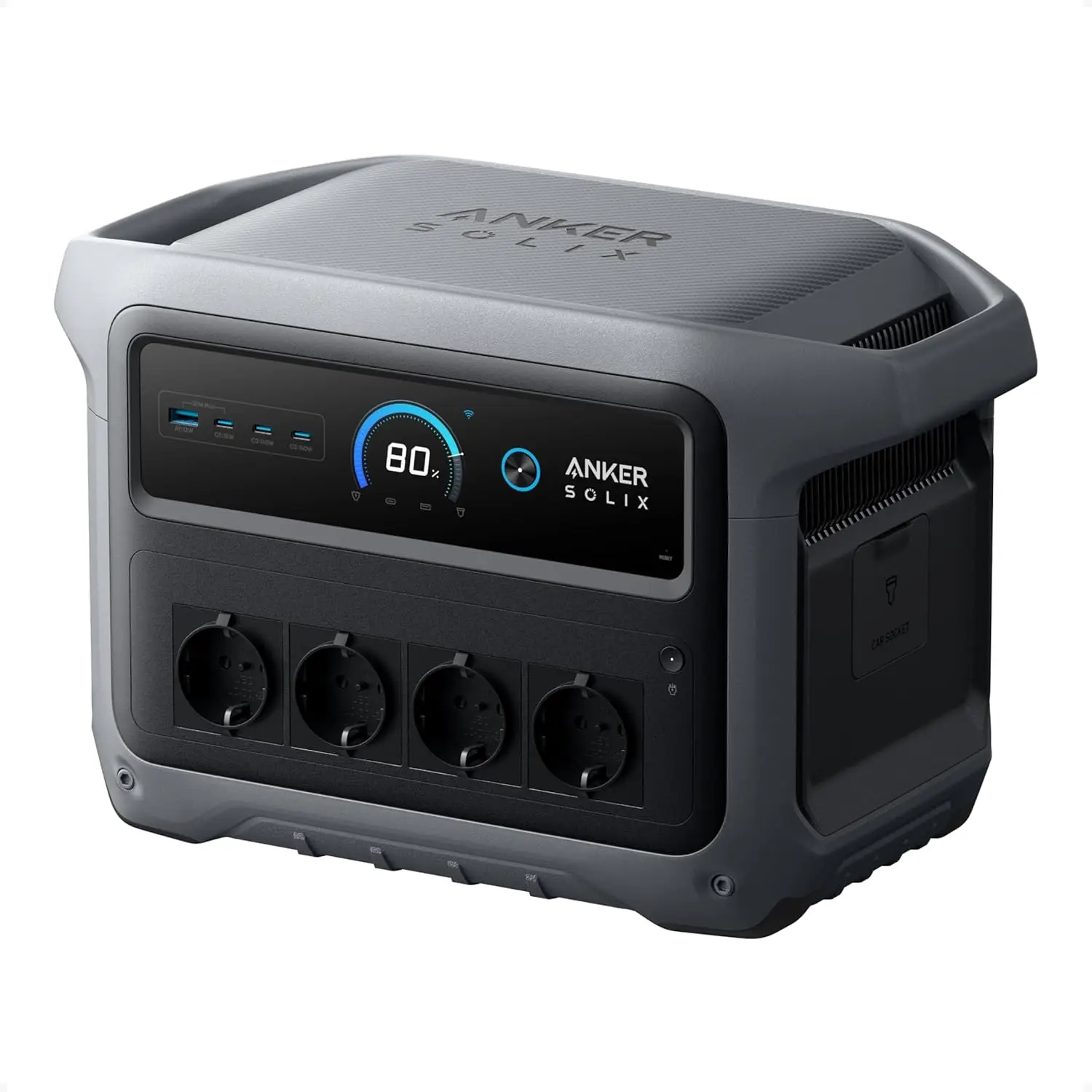 ANK·SOLIXAnker SOLIX C1000 Gen 2 Tragbare Powerstation€489+2.7%
 ECO·DELTAEcoFlow Delta 3 Powerstation 1024 Wh 0% MwSt.€535±0.0%
 ECO·DELTAECOFLOW DELTA 3 Classic Tragbare Powerstation 1024Wh LiFePO4€549±0.0%
 ANK·SOLIXAnker SOLIX C1000 Gen2 PowerStation 1024 Wh 2000W *NEU* 0%€587+10.7%
 ECO·DELTAEcoFlow Delta 3 Plus Powerstation 1024 Wh 0% Mwst.€593±0.0%
 BLU·ELITE100BLUETTI Elite100V2 Powerstation 1800W 1024Wh LiFePO4€699±0.0%
 JAC·E1000V2Jackery E1000v2 Powerstation mit 2x100W Solarpanel 1070Wh€750+5.3%
 DJI·POWERDJI Power 1000 V2 tragbare Powerstation, 1024 Wh LFP-Akku€509±0.0%
- DJI·POWERDJI Power 1000 Mini tragbare Powerstation, 1008-Wh-LFP-Akku1008 Wh · 1000 W€439+7.7%−3.5%−24.1%
- BLU·ELITEBLUETTI Elite 100 V2 Powerstation 1800W 1024Wh Solarspeicher Generator1024 Wh · 1800 W€461−21.5%+10.0%−16.0%
- ANK·SOLIXAnker SOLIX C1000 Gen 2 Tragbare Powerstation, 2000W Solargenerator1024 Wh · 2000 W€489±0.0%+2.7%+0.8%
- ECO·DELTAEcoFlow Delta 3 Powerstation 1024 Wh 0% MwSt.1024 Wh · 800 W€535±0.0%±0.0%−0.7%20 d
- ECO·DELTAECOFLOW DELTA 3 Classic Tragbare Powerstation 1024Wh LiFePO4 1800W AC1024 Wh · 1800 W€549±0.0%±0.0%–
- ANK·SOLIXAnker SOLIX C1000 Gen2 PowerStation 1024 Wh 2000W *NEU* 0% MwSt.1024 Wh · 2000 W€587±0.0%+10.7%–
- ECO·DELTAEcoFlow Delta 3 Plus Powerstation 1024 Wh 0% Mwst.1024 Wh · 800 W€593±0.0%±0.0%−2.5%
- BLU·ELITE100BLUETTI Elite100V2 Powerstation 1800W 1024Wh LiFePO4 Solarspeicher1024 Wh · 1800 W€699±0.0%––
- JAC·E1000V2Jackery E1000v2 Powerstation mit 2x100W Solarpanel 1070Wh LiFePO41070 Wh · 100 W€750±0.0%+5.3%+5.3%14 d
- DJI·POWERDJI Power 1000 V2 tragbare Powerstation, 1024 Wh LFP-Akku1024 Wh · 2600 W€509±0.0%±0.0%−15.9%
The 1 kWh class is the most popular compromise between capacity, weight and price – big enough for a fridge and coffee machine, yet still portable.
The all-rounder class
Power stations between 1,000 and 2,000 Wh usually offer 1,500 to 2,400 W of continuous output. That means power-hungry appliances such as kettles, microwaves or air fryers will run too – but only briefly, because they drain the battery quickly. Their strength lies in powering medium loads for many hours: a compressor fridge in a motorhome, lighting, laptop, router or pumps.
Weighing around 10 to 20 kg, these units can still be carried by one person. Many models can be expanded to double the capacity or more with extra batteries, so you can start with a medium size and upgrade later.
What matters in this class
Because many units have similar capacities, the details make the difference.
- Continuous and peak output: high peak output is important for fridges and tools; some units have a mode that runs resistive loads at reduced voltage.
- Mains charging time: fast charging fills 1 kWh in under an hour in some cases – handy when a power cut is forecast.
- Solar input: 500 W or more lets you recharge almost completely on sunny days.
- UPS switchover time: values below 20 ms are enough for most PCs and routers.
- App control via Wi-Fi or Bluetooth shows consumption and remaining runtime.
- Expansion port for extra batteries and compatible accessories.
Worked example: motorhome
Assumptions: compressor fridge averaging 40 W, lighting and phone charging together 20 W over six hours, laptop 50 W over three hours. That adds up to roughly 960 Wh + 120 Wh + 150 Wh per day, so around 1,230 Wh. With a 1,500 Wh power station (roughly 1,250 Wh usable after losses), you can manage about one day; with a 200 to 400 W solar panel, self-sufficiency on sunny days increases considerably. All figures are example assumptions – your consumption may differ significantly.
Price per watt-hour as a benchmark
Offers vary widely in this class. Divide the price by the capacity to compare the price per Wh – but only for units with comparable features. A unit with fast mains charging, high solar input and a UPS function can justifiably cost a little more per Wh than a basic model. The price history shows you whether a deal really is good value.