
Power Station with Solar Panel – Compare Kits
5 Battery storage systems from established makers · Selection index 111.9 +1.9% 7 d · avg €1,035 · as of 18/10/2026
Price table · 5 Battery storage systems
 JAC·E2000Jackery E2000 v2 Tragbare Powerstation mit 200W Solarpanel€999±0.0%
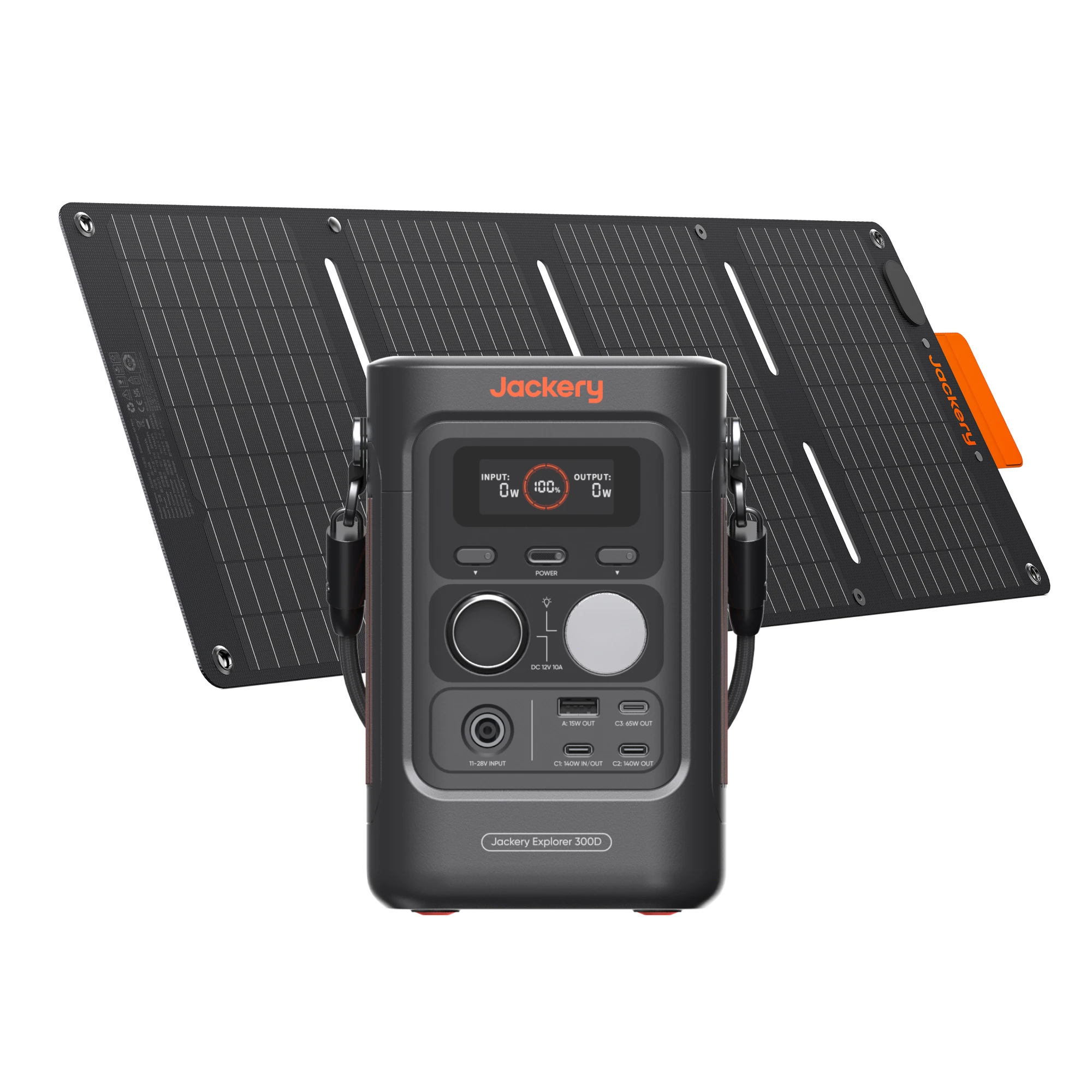 JAC·EXPLORERJackery Explorer 300D Tragbare Powerstation mit 40W€228−6.2%
 JAC·SOLARGENJackery Solargenerator 100 Plus Tragbare Powerstation mit€150+5.6%
 JAC·POWERSTAJackery Powerstation E3000 v2 mit 200W Solarpanel€1,800+5.3%
 JAC·EXPLORERJackery Explorer 3000 v2 Powerstation mit 2×200W Solarpanel€1,999+5.3%
- JAC·E2000Jackery E2000 v2 Tragbare Powerstation mit 200W Solarpanel2042 Wh · 200 W€999±0.0%±0.0%+5.3%
- JAC·EXPLORERJackery Explorer 300D Tragbare Powerstation mit 40W Solarpanel288 Wh · 40 W€228±0.0%−6.2%−9.3%22 d
- JAC·SOLARGENJackery Solargenerator 100 Plus Tragbare Powerstation mit 40WMIniPowerstation · With solar panel€150±0.0%+5.6%±0.0%24 d
- JAC·POWERSTAJackery Powerstation E3000 v2 mit 200W Solarpanel3072 Wh · 200 W€1,800±0.0%+5.3%+5.3%9 d
- JAC·EXPLORERJackery Explorer 3000 v2 Powerstation mit 2×200W Solarpanel3072 Wh · 200 W€1,999±0.0%+5.3%+5.3%17 d
In a kit, the power station and solar panel are matched to each other. That way you can recharge with solar energy on the go or during a power cut.
Why a kit can make sense
A power station is only independent for as long as it can be recharged. A foldable solar panel frees you from sockets and the car. In a kit, connectors, voltage and power usually match without adapters, and the bundle price is often lower than buying separately. The downside: you are tied to a particular panel size and type.
Before buying, check whether the panel matches the power station’s solar input rating. If the power station accepts up to 200 W of solar input, a 400 W panel will not charge it any faster – the charge controller (MPPT) limits it. Conversely, a small 100 W panel barely makes use of a large power station.
Estimating realistic charging times
A solar panel’s rated power is measured under laboratory conditions. In practice, portable panels in Central Europe often deliver 60 to 75% of it when well aligned, and much less under cloud. A rough calculation: a 200 W panel might generate 0.8 to 1 kWh on a sunny summer day. A 1,000 Wh power station can be filled on a good day, but probably not in spring or autumn.
- Point the panel straight at the sun and adjust it during the day – that gains more than a bigger panel.
- Avoid shade: even a partly shaded panel loses a lot of power.
- An ETFE coating is more robust than PET and better suited to frequent outdoor use.
- Check the panel’s IP rating; the junction box is often less well protected than the surface.
- Two panels can be connected in parallel or in series depending on the input voltage – observe the manufacturer’s maximum open-circuit voltage.
Who benefits from a solar kit
Campers, allotment gardeners, vanlifers and anyone who wants a backup power reserve that can be recharged benefit the most. If you only use the power station as a buffer on the mains, you do not need a panel. A kit does not replace a balcony solar system: power stations generally do not feed into the home grid, but power connected devices directly.
Comparing kit deals properly
Do the maths on kit deals: what do the power station and panel cost individually, and does the panel’s power suit your use? Check whether cables and adapters (such as MC4 to XT60 or Anderson) are included. Notes like “solar panel optional” mean the panel is not included – we hide such offers from this list.